External dimensions
| Size and type | External length | External width | External height | External footprint |
|---|---|---|---|---|
| 40′ Standard | 12.192 m | 2.438 m | 2.591 m | 29.72 m² |
| 40′ High Cube | 12.192 m | 2.438 m | 2.896 m | 29.72 m² |
These external dimensions are for reference. Check the container's measurements before buying. The external footprint is length × width, without the space needed to open the doors or manoeuvre. This calculation does not give the storage space inside.
A standard 40ft container is about 12.19m long outside. High Cube adds height at the same nominal length and width. Compare the internal measurements and doorway before planning the load.
Standard and High Cube height
The extra 8.6m³ in the High Cube example comes from height, not additional pallet floor space. For tall items, compare door clearance as well as the ceiling; the table separates those figures.
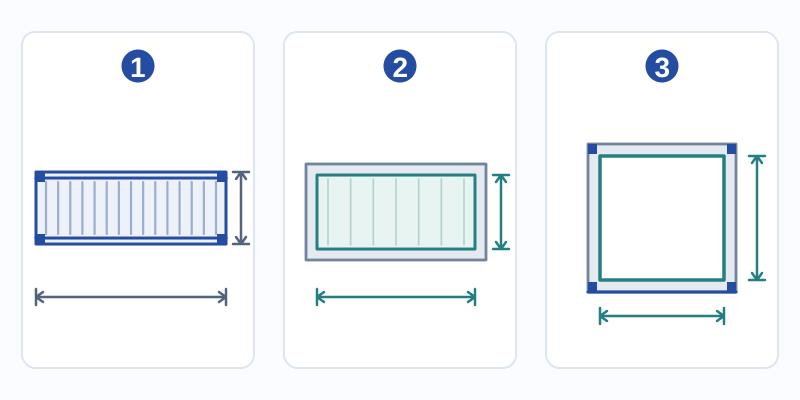
Visual reference
- External dimensions
- Internal space
- Door clearance
Illustrative diagram, not to scale.
| Measurement | 40-foot standard | 40-foot High Cube |
|---|---|---|
| Interior length | 12.032 m | 12.032 m |
| Interior width | 2.352 m | 2.350 m |
| Interior height | 2.395 m | 2.700 m |
| Door: width × height | 2.340 × 2.292 m | 2.340 × 2.597 m |
| Interior volume stated for this example | 67.7 m³ | 76.3 m³ |
External footprint: 29.7 m²; internal floor area: about 28.3 m²
Use the exterior for the site plan and the interior for storage. Linings, partitions and services reduce the finished floor area, so request a measured plan after any fit-out.
Check how to get long objects in and out
Check the complete route of a long item, including its width, supports, handling method and turning space outside. Plan retrieval after other stock is in place. Double Door or side access may help when one end entrance would leave goods blocked.
Calculate space for your belongings, not just volume
List the goods with their packaging and stacking limits. Machines, fragile furniture and regularly used stock need different layouts.
A 0.60 × 0.40 × 0.40m box has a volume of 0.096m³. Dividing 67.7 by that figure gives about 705 boxes before gaps or access. Treat this as a comparison calculation, then check rows, levels, stacking strength and a workable loading plan.
Draw pallets and shelving with their access ways
Measure loaded pallets, including overhang, and draw shelving with its handling aisle. Check door clearance, loading equipment, total weight and concentrated floor loads. There is no single pallet count for every 40ft container and load.
Allow space for the container and the truck
Show the container, open doors and unloading area on the site plan. Send the carrier the full approach, bends, slopes, overhead obstacles, ground details and supports. Compare 20ft and 40ft delivered quotes if either could hold your stock.
Information to prepare for a 40-foot container
- Standard or High Cube and actual measurements confirmed.
- Largest and longest items measured with their handling equipment.
- Pallets or shelving arranged with clear retrieval routes.
- Finished plan used for a lined or partitioned interior.
- Delivery route and unloading position assessed.
See matching models
Containers to compare
Example models with guide prices before VAT, delivery and unloading. Images are illustrations; ask for photos of the container offered.
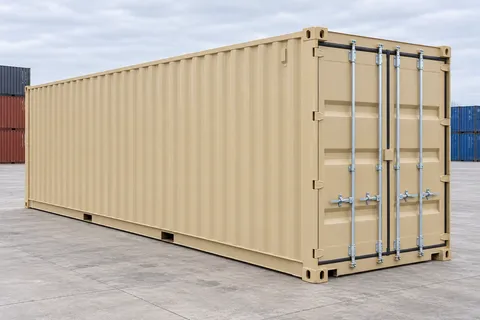
CA-40-STANDARD-NEW-BEIGE
40ft Standard container · New · one trip · Beige
New · one trip / Beige
£2,610 Indicative, excl. VAT
Request a quote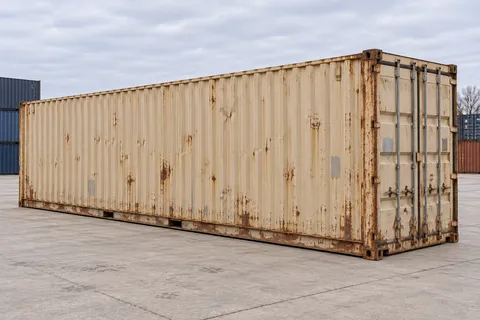
CA-40-STANDARD-C-BEIGE
40ft Standard container · Used · last trip · Beige
Used · last trip / Beige
£970 Indicative, excl. VAT
Request a quote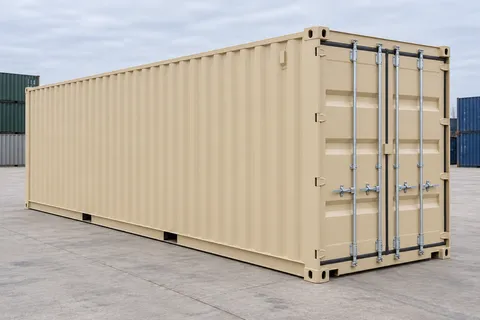
CA-40-HIGH-CUBE-NEW-BEIGE
40ft High Cube container · New · one trip · Beige
New · one trip / Beige
£3,010 Indicative, excl. VAT
Request a quote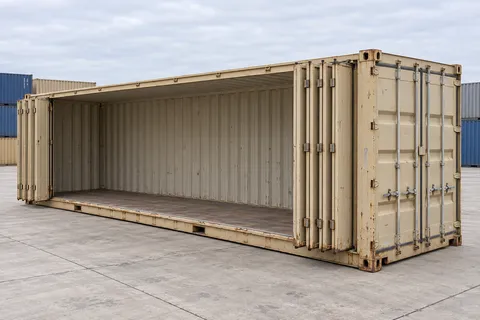
CA-40-OPEN-SIDE-B-BEIGE
40ft Open Side container · Used · good condition · Beige
Used · good condition / Beige
£3,760 Indicative, excl. VAT
Request a quote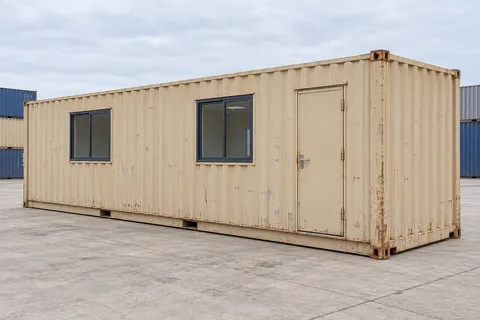
CA-40-OFFICE-B-BEIGE
40ft Office container · Used · good condition · Beige
Used · good condition / Beige
£8,520 Indicative, excl. VAT
Request a quote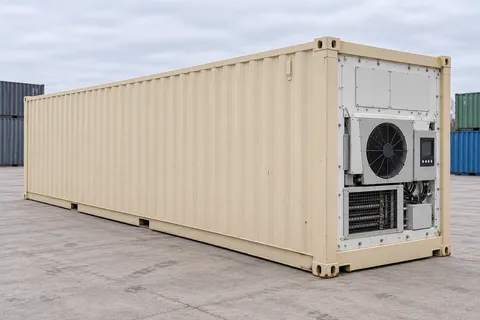
CA-40-REEFER-A-BEIGE
40ft Refrigerated container · Used · excellent condition · Beige
Used · excellent condition / Beige
£8,900 Indicative, excl. VAT
Request a quote