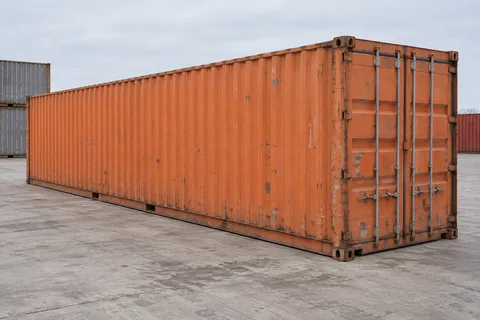
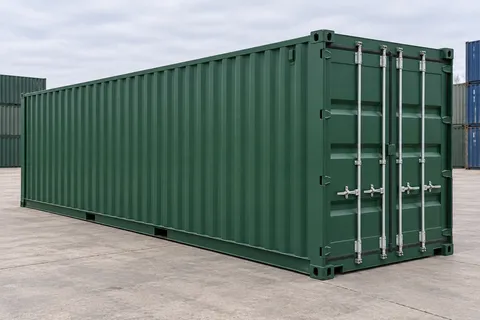
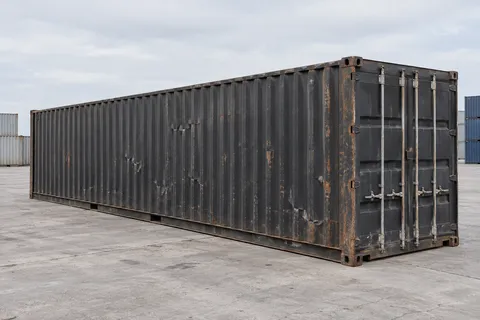
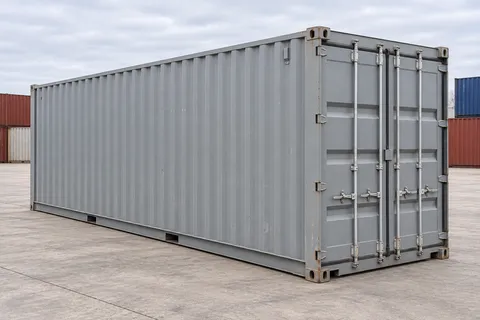
A standard 40ft dry container gives you a long storage space with doors at one end. Compare new one-trip and used conditions below. Plan how you will reach goods at the back as well as how much you can fit inside.
STANDARD 40FT
Compare standard 40ft conditions
Availability to be confirmed.
Search by size, type, condition, colour or reference. Use arrows for suggestions, Enter to select, Escape to close.
Will my load fit through a 40ft standard container door?
The reference doorway below is 2.292m high. A piece of equipment that stands 2.35m on its trolley would fit under the ceiling once inside, but it could not go through that doorway upright. Measure the load in its moving position and get the clear opening on the unit offered.
If the doorway is the deciding factor, compare it with a 40ft High Cube. Tell the carrier about any low roof on the approach so they can check the height on the lorry.
40ft standard container storage layout
Sketch the shelves and trace how you would take a long item out from the far end once the container is full. Allow space to turn your trolley and put regularly used goods near the doors, where you can reach them without unloading other items.
If you regularly need stock at both ends and the layout leaves too little aisle space, compare a double-door container. It needs usable space at both entrances. If you work from the yard alongside the unit, compare a side-opening model and check how far its doors swing.
What to check on a used 40ft standard container
Ask for photos along the full length of the floor and roof, with close-ups of the door seals and any repairs. Check that both door leaves open and lock freely. If heavy equipment will sit in one spot, describe its weight and support points so the floor can be assessed for that load.
Guide prices exclude VAT, delivery and unloading. Compare the same condition and equipment, with repairs, painting and security fittings priced separately.
40ft standard container dimensions
Standard dry-container references for planning. Confirm the measurements of the unit the supplier offers.
40ft standard container dimensions
Measurement
Standard 40ft dry reference
Outside — length × width × height
12.192m × 2.438m × 2.591m
Inside — length × width × height
12.032m × 2.352m × 2.395m
Door opening — width × height
2.340m × 2.292m
Nominal internal capacity
67.7m³
Ground footprint, excluding access
About 29.7m²
Allow for shelving, an aisle and the shape of your goods when planning what will fit. Check the measurements of the actual unit, and allow space for doors and delivery.
Questions about delivery and storage
How much space does a lorry need to deliver a 40ft container?
Ask for the dimensions of the vehicle booked for your site. Send the clear width with the gate open, photos of the tightest turn and a plan of where the lorry could stand to unload. Show overhead obstacles and which way you want the container doors to face.
Can a 40ft container be delivered over a fence?
A lorry-mounted crane, often called a HIAB, may be able to lift it over a fence. Send the fence height, a photo of the approach and the distance from a possible lorry position to the final spot. The carrier needs to check the crane reach, ground and overhead clearance before booking the lift.
Do I need a concrete base for a 40ft container?
A full concrete slab is one option. Have the supports specified for your ground and the weight of the loaded container. Tell the installer about slopes, soft patches or recent fill. Agree the support positions and levels before delivery so the container sits level and the doors open freely.
Will a used 40ft container stay dry inside?
Ask how the offered container was checked for leaks. Condensation can still form on cold steel inside a container that keeps rain out. For furniture, cardboard or textiles, discuss ventilation or lining for the storage period, and let damp items dry before loading.