Choose the container around your goods, the way you will reach them and the site. Start with size and doors, then compare condition and the complete delivered cost.
Start with what you want to store
List the goods, quantities, dimensions and weights. Mark items that must stay upright, need particular storage conditions or will be taken out every day. These details determine the space and access you need.
Choose a container size from your storage layout
Nominal 10ft, 20ft and 40ft containers are roughly three, six and twelve metres long outside. Use internal measurements for the storage plan, with shelving and an aisle. Two smaller stores may work better than one long space when teams need separate access.
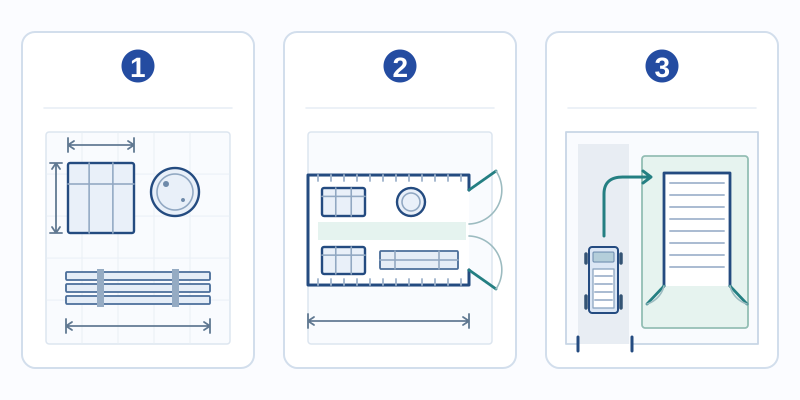
Visual reference
- Inventory
- Size and configuration
- Site and placement
Illustrative diagram, not to scale.
Check the doors and height
Standard doors give access at one end; Double Door opens at both ends; side-opening gives access along a long side. Choose the route your largest item needs to follow.
High Cube adds height. Open Top allows loading from above with suitable lifting equipment. Check the clear openings and working space for the actual design.
| Your need | Model to look at | What to check |
|---|---|---|
| Storage accessible from the end | Standard | Door and storage plan |
| Tall objects | High Cube | Interior height and door height |
| Access from both ends | Double door | Location and clearance of both accesses |
| Load objects from the side | Side opening | Clear opening and loading method |
| Loading from the top | Open Top | Lifting equipment and usable opening |
| Controlled temperature or workspace | Refrigerated or office | Equipment, power supply, and detailed services |
Choosing between new and used
Decide which cosmetic marks you can accept, then check the roof, floor, doors, seals and repairs in current photos. Ask the seller to define the grade and record the condition agreed. New or used describes condition, not the equipment included.
For an office or refrigerated container, ask for the equipment list
For an office, give the occupancy, furniture and access needs. Request a finished plan showing insulation, ventilation, electrics and the connections required on site.
For a reefer, give the goods, arrival and storage temperatures, door-opening frequency and available power. Ask for the refrigeration specification and test results for that duty.
Check the site and the total delivered price
Show the usable entrance, bends, ground, overhead obstacles and final position on a site plan. Have the carrier agree access and unloading. Check the proposed position and use with the relevant local authority.
Ask for an itemised quote covering the container, VAT, transport, unloading, fittings and any work needed. Compare the same services for the same address.
Review the quote and check the delivery
Separate essential requirements from preferences in your enquiry. You can ask for advice before choosing a model. Before ordering, check the specification, work included, delivery date and total; keep that offer to compare with the unit delivered.
Information to prepare before requesting a quote
- Contents, quantities and largest dimensions.
- Access frequency, handling method and storage conditions.
- Size, door layout and condition to compare.
- Equipment needed for an office or reefer.
- Delivery address, access photos and unloading needs.
- Itemised offer and agreed delivery date.