Choose side access around the full path of the goods and handling equipment. Nominal container length does not establish the clear opening or the working room outside.
Explain why you need side access
Identify the problem: a wide load, access to several stock areas or retrieval without moving other goods. Draw both initial loading and daily movements; keep that route usable after fences, equipment and other stores are in place.
Compare Standard, Double Door, Open Side, and Open Top
Standard opens at one end, Double Door at both short ends, side-opening along a long side and Open Top from above. Compare the route required by the goods, using the actual design rather than the sales name.
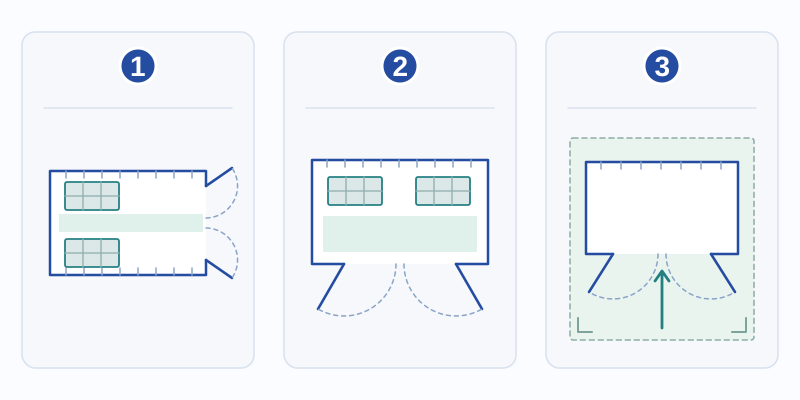
Visual reference
- End access
- Illustrated side access
- Clearance and approach
Illustrative diagram, not to scale.
| Type of opening | Main question | Space to keep clear on the plan |
|---|---|---|
| Standard | Do goods go through one end and stay accessible? | In front of the door and all the way to the back |
| Double Door | Does access from both ends make storage easier? | In front of both short sides |
| Side opening | Does the side allow the passage and positioning you need? | Along the opening side and in the manoeuvring area |
| Open Top | Does the load need to come in from above? | Lifting zone and operations suited to top loading |
Ask for the clear width and height with the doors open
Request a drawing showing clear width and height, fixed posts, thresholds, door movement and sections that can open together. A 40ft unit may have several separate openings.
Measure the load with packaging, pallet and handling equipment. Check every passage from the gate to its final position and keep the measured plan with the enquiry.
- Clear width and height of the opening actually used.
- Fixed posts, threshold, handles, and obstacles on the route.
- Position of open doors and space needed to operate them.
- Dimensions and weight of the item with its handling device.
Leave room for the doors and for manoeuvring
Draw the doors fully open, the loaded handling equipment and pedestrian routes, with nearby walls, fences and ground levels. Ask how doors are held in position. The handling provider assesses the clearances for that particular mechanism, equipment and load.
Check whether a forklift can enter the container
Payload is a total contents limit, not a rating for forklift wheel loads. Have the loaded vehicle, floor, threshold and opening checked for the actual container before any entry.
If the machine remains outside, assess how goods will be set down and moved inside. Do not use a trial drive or a general load rating as approval for the operation.
Inspect the doors, locking mechanisms and floor
Inspect the doors, mechanisms, seals, thresholds, floor and repairs, and arrange a closing demonstration for a used unit. Test operation on the final supports at delivery.
Discuss proposed alterations before choosing the unit and have their structural effects assessed.
Choose the size and compare the full budget
Compare 20ft and 40ft models using the same loading plan and site information. Have opening dimensions, equipment, condition and checks identified in the offer. Guide prices exclude VAT, delivery and unloading; itemise any fittings, alterations and extra services.
The plan to send with your request
- Goods, packaging and handling method measured.
- Actual opening, posts, thresholds and door positions documented.
- Loaded equipment route and floor limits assessed.
- Side working area retained in the final site plan.
- Door condition and operation checked.
- Delivered offer identifies the design, fittings and work.
Explore suitable models
Containers to compare
Container price excluding VAT. Delivery and unloading costs depend on your postcode and access. Ask the supplier to confirm the included equipment and the container's performance in the quote.
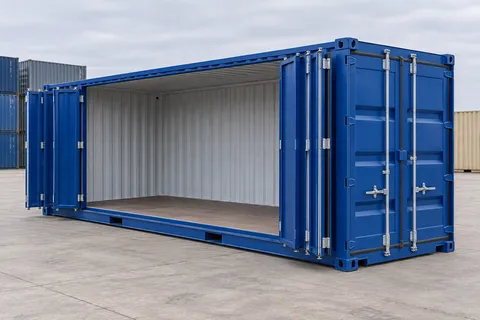
CA-20-OPEN-SIDE-NEW-BLUE
20ft Open Side container · New · one trip · Blue
New · one trip / Blue
£3,670Excluding VAT
Request an offer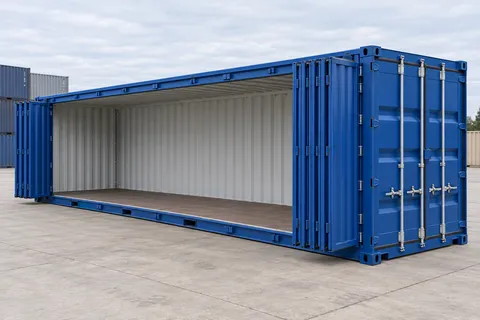
CA-40-OPEN-SIDE-NEW-BLUE
40ft Open Side container · New · one trip · Blue
New · one trip / Blue
£7,310Excluding VAT
Request an offer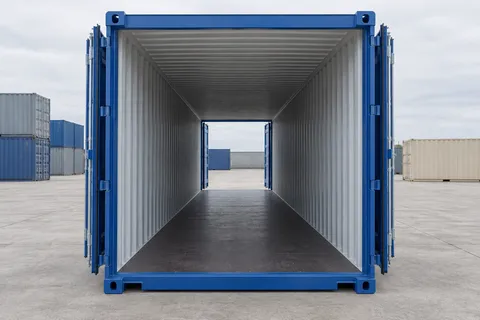
CA-40-DOUBLE-DOOR-NEW-BLUE
40ft Double Door container · New · one trip · Blue
New · one trip / Blue
£3,920Excluding VAT
Request an offer