Inspect the actual container, not just the grade or catalogue picture. Record defects against your storage needs and have doubtful damage or specialist uses professionally assessed before buying.
What to check before viewing a used container
List the essentials: rain protection, usable doors, sound flooring, cleanliness and required equipment. Separate these from cosmetic preferences. For heavy machinery, vehicle entry or a conversion, ask for checks specific to that project.
Check that the photos and documents match the right container
Match the container number across the offer, dated photos and documents. Record equipment, inspections and repairs included. For a return to shipping, have the CSC and examination documents checked separately; they do not establish cleanliness or suitability for a workspace.
- A photo where the container number is readable.
- Recent photos of the sides, doors, and interior.
- A list of known defects and repairs.
- A list of included equipment and tests to plan.
- The inspection documents needed for what you intend to do with it.
Look at the outside without taking risks
From safe positions on the ground, look for deformation, cracks, tears and repairs in the walls, corners and posts. Photograph each concern close up and in a wider view.
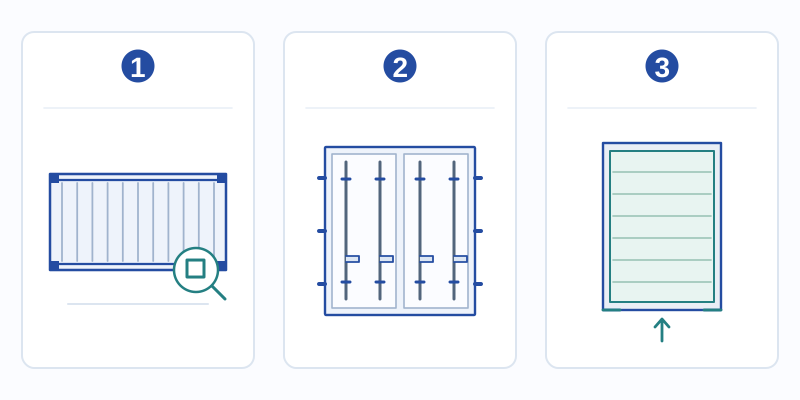
Visual reference
- Structure
- Doors and mechanisms
- Floor
Illustrative diagram, not to scale.
Have significant corrosion or uncertain repairs assessed. Ask for properly obtained roof and underside photos; do not climb on the container or crawl underneath it.
Inspect the doors, interior and floor safely
Have the doors fully opened and closed. Check handles, locking bars, hinges and seals, with the unit properly supported. Rubbing or a misaligned mechanism needs an explanation.
Enter only when safe and authorised. Report residues, unusual smells, treatment markings or unknown previous contents; smell does not establish safe air. If in doubt, remain outside. Never be locked inside for a daylight test, which would not establish watertightness anyway.
View the floor and joints for holes, separation, stains and water marks from a safe position. Do not load a doubtful area as a test. Have cleanliness and previous use assessed for sensitive goods or occupancy.
Decide what to do about each defect
For each defect, note its location, evidence and next step: accept, explain, repair or inspect professionally. Agree the repair and how its result will be checked. Resolve significant unknowns before deciding on a low price.
| Observation | Photos and information to keep | To check before buying |
|---|---|---|
| Scratch or dent considered cosmetic | Wide view and detail of the area | Check that the defect does not spoil the appearance you want or affect how you plan to use the container. |
| Corrosion with loss of material or doubtful joint | Location and photos, without destructive testing | Have it checked by a professional or choose another container |
| Hard-to-open door or worn seal | How the door opens and closes, and the condition of its parts | Identify the cause, plan the repair, and check the result |
| Water stain, residue, or unexplained odour | The affected area and any known past uses or incidents | Have the cause checked before you decide the container is watertight or clean. |
| Missing document or identification | List of missing information | Get the missing information before confirming that the container meets your needs. |
Do the checks remotely
Request views of every side and close-ups of defects. A continuous door and interior video can clarify operation, but does not replace a structural inspection. Have declared defects recorded in the offer; arrange a visit or inspection when the evidence is insufficient.
Check the container on delivery
Keep the offer, photos and messages ready. After unloading, approach when the operator permits and compare the number, condition, repairs and equipment. Check doors on the final supports without forcing them.
Photograph and report differences under the agreed terms. Investigate sticking doors and the installation before deciding their cause.
Checklist to keep for purchase and delivery
- Actual unit number matches photos and offer.
- Required use and acceptable wear defined.
- Exterior, doors and floor viewed safely.
- Unknown damage, residues or specialist uses assessed.
- Repairs, equipment and checks recorded in writing.
- Evidence ready for receipt.
Find the right type of container
Containers to compare
Models available from our partner sellers. Indicative prices exclude VAT, transport, and unloading. The images show the models: ask for recent photos of the container you are buying.
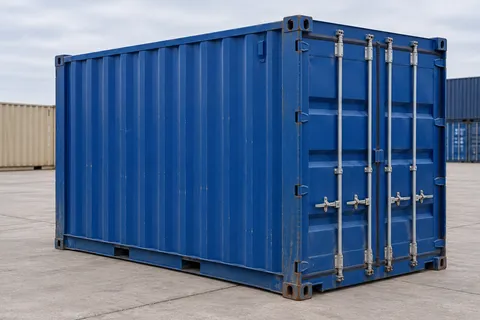
CA-10-STANDARD-A-BLUE
10ft Standard container · Used · excellent condition · Blue
Used · excellent condition / Blue
£1,560Indicative, excl. VAT
Request a quote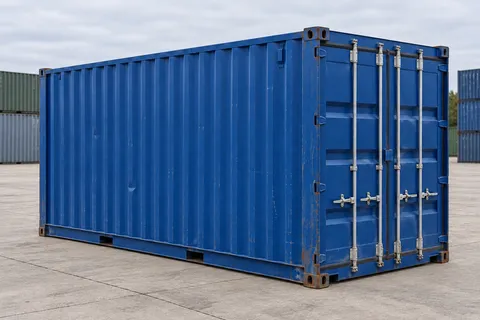
CA-20-STANDARD-A-BLUE
20ft Standard container · Used · excellent condition · Blue
Used · excellent condition / Blue
£850Indicative, excl. VAT
Request a quote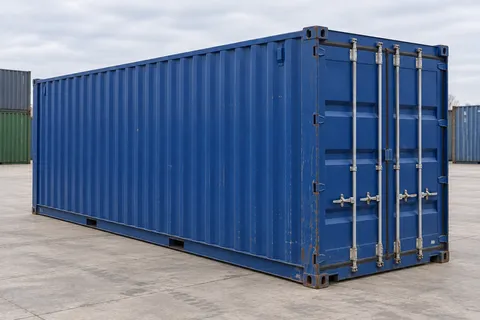
CA-40-STANDARD-A-BLUE
40ft Standard container · Used · excellent condition · Blue
Used · excellent condition / Blue
£1,480Indicative, excl. VAT
Request a quoteTechnical references
- HSE — Freight container safety
Tips for spotting defects and inspecting or moving a container safely. The rules mentioned apply to the UK.
- IMO — International Convention for Safe Containers
The CSC convention covers safety checks for international transport. It doesn't certify how clean the container is or whether it's still compliant after being converted into a building.