Prepare a site plan before arranging delivery. The groundworks contractor and carrier need to assess the approach, unloading area and final supports for the actual container and operation.
Draw access, unloading, and placement separately
Draw the container with doors, fitted equipment and daily loading routes. Separately mark the lorry approach, turning and exit route, and its unloading work area. These spaces serve different purposes.
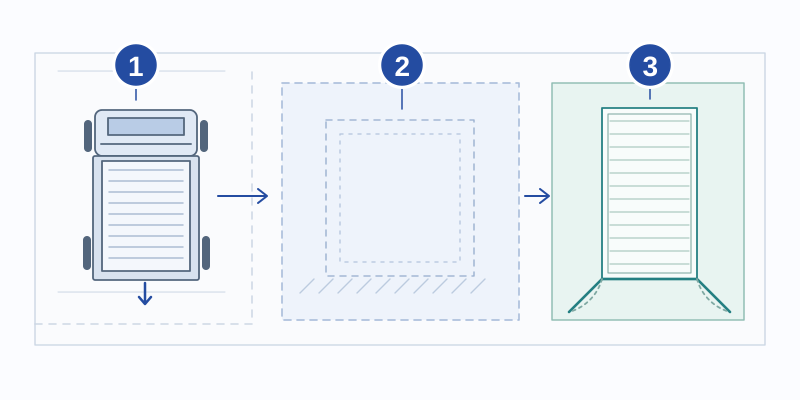
Visual reference
- Truck access
- Working area
- Position and doors
Illustrative diagram, not to scale.
- Label the truck route, unloading area and final container position on the plan.
- Reference the photos with the same letters or numbers as on the drawing.
- Note measurements at narrow passages and other restricted points, not just at the gate.
- Mark permanent obstacles and those that can be moved before delivery.
Check the weight the ground can support
Record the soil or fill, existing slab, slope, recent work, cracks, settlement and areas that hold water. These observations help the assessment; they do not measure bearing capacity.
Have the loaded container, vehicle and unloading equipment assessed separately. They load different positions, and ground conditions can change after rain.
Have the supports designed for the ground and load
Have support positions, sizing and preparation defined for the ground, container, contents and modifications. An existing slab needs assessment too; adding blocks or shims at random is not a substitute for the project plan.
| Situation or solution considered | What to check | What to watch for |
|---|---|---|
| Existing slab | Composition, condition, capacity, and compatibility with the planned supports | A flat slab is not necessarily strong enough |
| Point supports defined for the project | Location, sizing, stability, and level of each support | Supports that fit another container may not fit yours |
| Prepared and compacted platform | Nature of layers, ground treatment, and planned checks | The visible surface layer is not enough to know the whole support |
| Uncertain soil, fill, or slope | Assessment of the ground and necessary work before booking | Do not make up for uncertainty with improvised shimming on the day |
Deal with water and utilities before earthworks
Show runoff, downpipes and low spots. Plan drainage with the rest of the site so water does not pool around supports or make the route unusable.
Before digging or drilling, have buried services located and identified. Give the groundworks team and carrier details of known utilities, manholes, pits and buried structures; records and visible covers alone do not establish that the area is clear.
Keep the spot usable after placement
Keep door movement, staff access and the route of long or bulky items clear after placement. Allow access for inspection and maintenance. For refrigeration or fitted equipment, use the actual instructions for ventilation, connections and service clearances.
Settle the last details before booking
Send a dated plan and marked photos. Agree who prepares the ground, builds and checks supports, unloads and positions the container, with the services priced in writing.
Finish outstanding work before booking and report changes before the lorry leaves, including heavy rain, new excavation, blocked access or a different position.
Check the placement, then keep an eye on the supports and doors
Stay outside the handling area and approach only when the operator says it is safe. Check orientation, supports, clearance and door operation against the plan; photograph the finished placement.
Watch for settlement, water or doors becoming harder to close. Have the installation checked if conditions change. Do not move supports yourself beneath a loaded container.
Site information to send
- Measured plan separates the approach, work area and final position.
- Ground, water, fill and uncertain areas recorded.
- Buried services and structures identified for the work.
- Supports and preparation defined for the actual load.
- Door, loading and maintenance clearances retained.
- Responsibilities, services and recent changes agreed before delivery.
Find the right type of container
Containers to compare
Models available from our partner sellers. Indicative prices exclude VAT, transport, and unloading. The images show the models: ask for recent photos of the container you are buying.
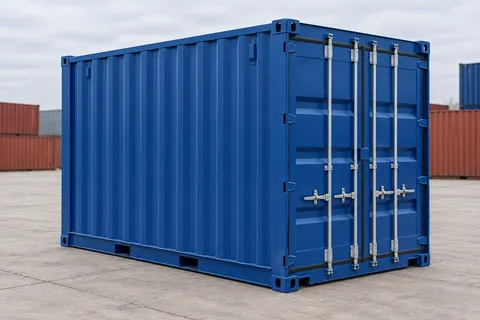
CA-10-STANDARD-NEW-BLUE
10ft Standard container · New · one trip · Blue
New · one trip / Blue
£1,950Indicative, excl. VAT
Request a quote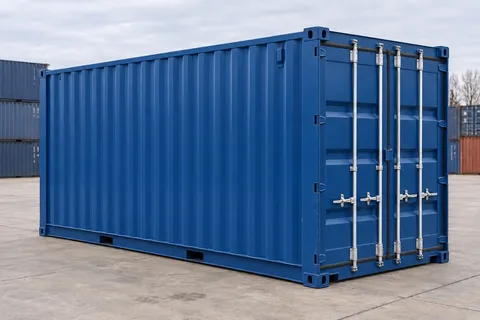
CA-20-STANDARD-NEW-BLUE
20ft Standard container · New · one trip · Blue
New · one trip / Blue
£1,390Indicative, excl. VAT
Request a quote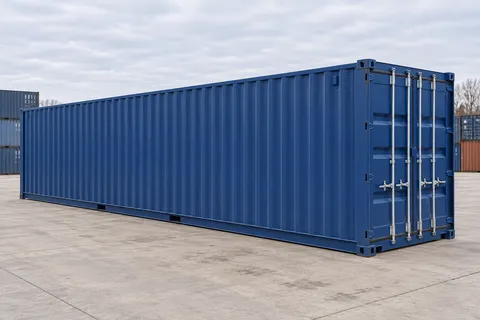
CA-40-STANDARD-NEW-BLUE
40ft Standard container · New · one trip · Blue
New · one trip / Blue
£2,610Indicative, excl. VAT
Request a quoteTechnical references
- Bison — Efficient Handling of ISO Containers
Things to check before delivery: container type, weight, access, ground, equipment, and risks. The foundations and space you need depend on the site and the container.
- HSE — Avoiding danger from underground services (HSG47)
Planning work, locating and identifying buried services, and safe excavation. Foundation design still depends on the actual site and container.