Match the refrigeration duty to the goods before choosing the size. Check the loading plan, power supply and actual equipment together.
Describe the products before choosing the refrigeration unit
Give the products, packaging, maximum stock, arrival temperature, storage temperature and acceptable range. Add storage duration and any recording requirements. Ask whether products with different needs can share the unit.
Holding goods already at temperature and cooling warm goods are different duties. If cooling is required, state the mass added and time available and have capacity checked for that operation.
Draw the storage layout and the passages you need
Draw the maximum load, packaged dimensions, shelving and route to each batch. Follow the actual unit’s instructions for floor air paths, distribution and loading limits. Goods and packaging must leave the required airflow clear.
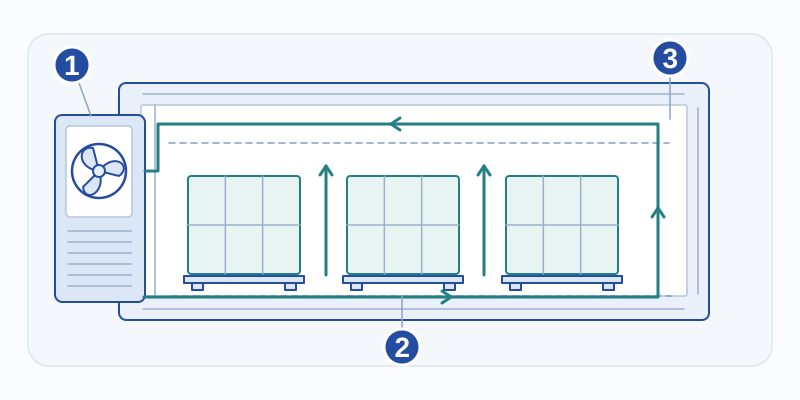
Visual reference
- Refrigeration unit
- Cargo arrangement
- Illustrative airflow
Illustrative diagram, not to scale.
- Record the dimensions and weights of the packaged goods, including pallets and other supports used to move them.
- Mark the routes for reaching the goods and show which way the doors will face on the site plan.
- Have the spaces to keep clear for air flow and maintenance confirmed.
Choose between 20 and 40 feet based on storage and access
Compare 20ft and 40ft layouts for the same goods and temperature requirement. Check internal dimensions, doorway, batch access and site space. A longer unit may add walking distance without improving access.
| Your constraint | Question to ask | What to get |
|---|---|---|
| Limited space along the length | Do the truck and the unit have the clearances they need? | Site plan showing where the container will go and the access routes |
| Stock spread over a long length | How can you reach each batch without disturbing the other goods? | Interior plan and routes for moving goods |
| Bulky products or packaging | Do the door opening and loading height work for you? | Useful dimensions of the container you're offered |
| Frequent openings | Which tests match this level of access? | Agreed conditions of use and test method |
Check the refrigeration unit, not just how the container looks
Identify the refrigeration make, model and serial number, with age where known, maintenance, faults and repairs. Assess the machinery separately from the shell’s appearance.
For a used unit, ask who tested it, when, at what set and ambient temperatures and for how long, with results and faults recorded. Have repairs, missing equipment and offer exclusions specified.
Check the power supply and placement before delivery
Give the actual electrical specification to a qualified professional: voltage, phase, frequency, current, connector and protective devices must suit the unit and site.
Show access, supports, final position and maintenance space. Agree who transports, unloads, connects, commissions and tests the installed unit.
Plan for door openings, alarms, and daily monitoring
State operating hours and door-opening frequency. Ask which readings, records, alarms and sensors are included or optional. Assign responsibility for records, alerts and maintenance, with suitable backup arrangements if a cooling failure would disrupt the business.
Compare all costs up to actual use
Compare the same duty, size, equipment, tests, condition and destination. Itemise the unit, VAT, delivery, unloading, connection and commissioning, then consider maintenance alongside the purchase price.
Information to prepare before requesting a quote
- Goods, maximum stock and temperature duty specified.
- Loading plan keeps airflow and batch access clear.
- Unit identity, service history and test evidence obtained.
- Electrical supply and site services checked for that equipment.
- Monitoring, maintenance and responsibilities agreed.
- Complete installed cost compared for the same duty.
Explore suitable models
Containers to compare
Container price excluding VAT. Delivery and unloading costs depend on your postcode and access. Ask the supplier to confirm the included equipment and the container's performance in the quote.
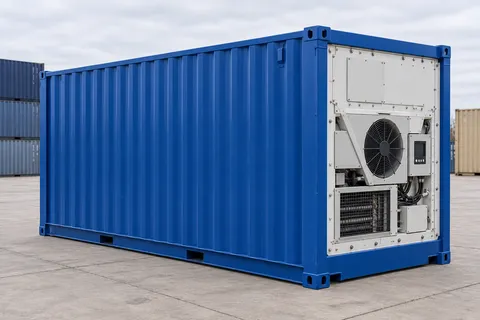
CA-20-REEFER-NEW-BLUE
20ft Refrigerated container · New · one trip · Blue
New · one trip / Blue
£13,900Excluding VAT
Request an offer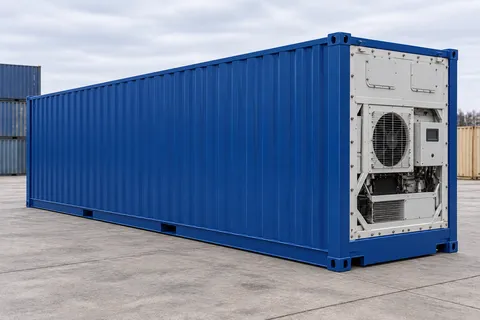
CA-40-REEFER-NEW-BLUE
40ft Refrigerated container · New · one trip · Blue
New · one trip / Blue
£22,200Excluding VAT
Request an offer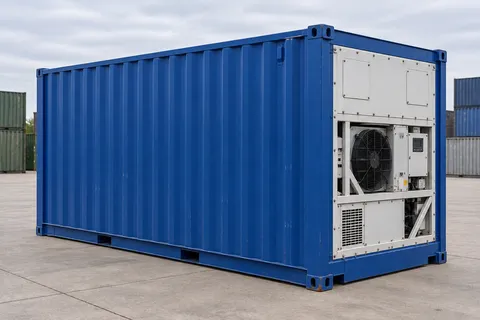
CA-20-REEFER-A-BLUE
20ft Refrigerated container · Used · excellent condition · Blue
Used · excellent condition / Blue
£4,650Excluding VAT
Request an offerPractical questions
Can you tell the power consumption from whether it's a 20-foot or 40-foot container?
No. The unit, the temperature you set, the weather, the load, and how often you open the doors all matter. Ask for figures that match your situation. Distinguish between electrical power, energy actually consumed, and what it costs under your electricity contract.
Technical references
- Hapag-Lloyd — Reefer cargo handling
A carrier’s guidance on pre-cooled goods, loading limits and airflow. Follow instructions for the actual equipment and goods; this is not a cooling-performance guarantee.