Tell the seller what goes into the reefer, how warm it is on arrival and when you need it ready. Holding already-cold cartons is a different job from cooling a warm delivery. Put the busiest day in your request so the seller can assess the right equipment.
Specify the job in degrees Fahrenheit
List the products, incoming and target temperatures, largest delivery and usual door-opening schedule. If the unit needs to cool incoming goods, state how quickly you need that done and ask the seller for a capacity assessment.
Draw the loaded pallets and airflow paths
Use the inside dimensions, door opening and loading instructions for the exact reefer. Leave the floor channels and marked air paths clear. If you need one pallet in the back every morning, allow room to reach it without unloading the rest.
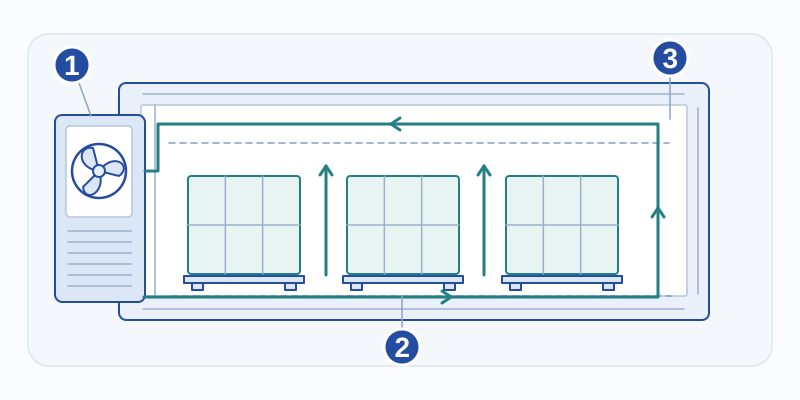
Visual reference
- Refrigeration unit
- Cargo arrangement
- Illustrative airflow
Illustrative diagram, not to scale.
Choose between 20ft and 40ft around your busiest receiving day
A 20ft near a loading door can suit smaller batches if they fit with the required air paths. A 40ft gives you more floor length, with stock at the back to plan for. Compare the retrieval layout and the clear space for service at the machinery end.
Check the box and the refrigeration unit separately
Inspect the door seals, insulated lining and floor. For a used reefer, get the machine model and serial number and request the latest pre-trip inspection. Ask what the test covered and what further evidence you need for your load and set point.
Match the electrical supply before paying
Send the electrician the equipment nameplate and plug details. Check voltage, phase, connection and cable reach. Ask what the quoted machine needs if your site has only single-phase service, and get the cost of any work before delivery.
Decide how you’ll know about a temperature problem
Ask which readings, records and alerts the controller provides. Plan who responds after hours and where stock can go if power fails. For a temperature-sensitive load, check what monitoring you need near the product as well as at the unit.
Compare ready-to-run offers
Ask for the shell, machine, delivery, unloading, hookup, testing and service terms on separate lines. Put the same operating requirements on both requests so each seller is quoting the same job.
Information for a reefer quote
- Incoming and target temperatures in °F, load size and door-opening schedule.
- A pallet plan with airflow and service clearances.
- Nameplate and test records for the offered equipment.
Explore suitable models
Containers to compare
Estimates in USD before applicable sales tax, delivery and unloading. The seller confirms taxes and the complete price for your delivery address.
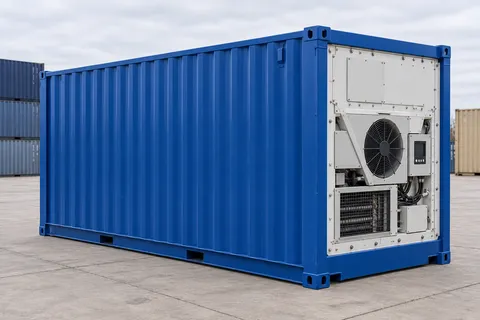
CA-20-REEFER-NEW-BLUE
20ft Refrigerated container · New · one trip · Blue
New · one trip / Blue
$20,100Before applicable sales tax
Request an offer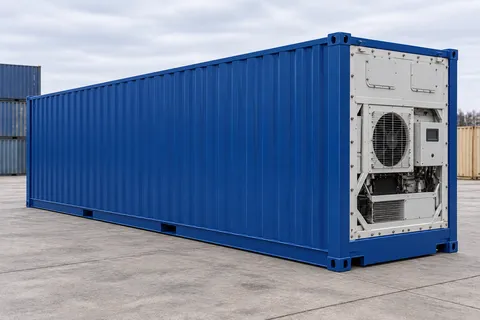
CA-40-REEFER-NEW-BLUE
40ft Refrigerated container · New · one trip · Blue
New · one trip / Blue
$25,700Before applicable sales tax
Request an offer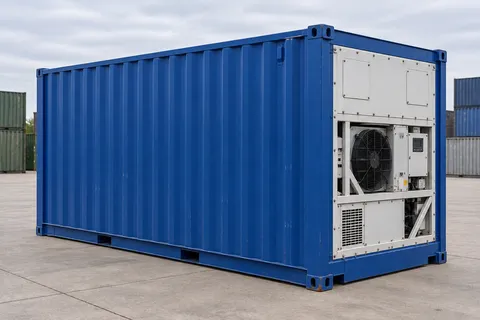
CA-20-REEFER-A-BLUE
20ft Refrigerated container · Used · excellent condition · Blue
Used · excellent condition / Blue
$8,760Before applicable sales tax
Request an offerPractical questions
Will a reefer run from a regular outlet?
Have an electrician verify the connection for the exact machine. Some commercial units use three-phase service and some are configured for single-phase. The model and nameplate tell you what to plan for.
Can I cool warm product in a used reefer?
Ask for evidence that the unit can remove the required heat from your planned load in the time you have. Provide the incoming temperature, target, amount of product and door schedule.
Technical references
- Carrier Transicold PrimeLINE power specifications
Examples of model-specific electrical supply requirements.
- Carrier Transicold controller documentation
What a pre-trip diagnostic and controller can report.
- Conexwest cold storage catalog
Examples of single-phase and three-phase configurations in the US.