A standard 20ft dry container weighs about 5,180 lb empty in the fleet example below. Use the tare of the specific unit when booking a move, especially if it has been fitted out, shortened or repaired.
Documented example · 20-foot standard
| Tare · empty weight | 5,181 lb |
|---|---|
| Maximum payload | 62,016 lb |
| Maximum gross mass | 67,197 lb |
Example from a transport company’s fleet. Values vary by manufacturer and do not establish availability. Check the offered container’s markings and documents.
Calculate the mass to move
An empty container weighing 5,181 lb plus 10,000 lb of contents weighs about 15,181 lb before adding the truck and trailer.
Tare, payload and gross weight in pounds
Tare is the weight of the empty equipment in its stated configuration. Payload is the weight you can put inside under the container’s rating. Gross weight is the container plus its contents. Transport and lifting equipment can have different limits.
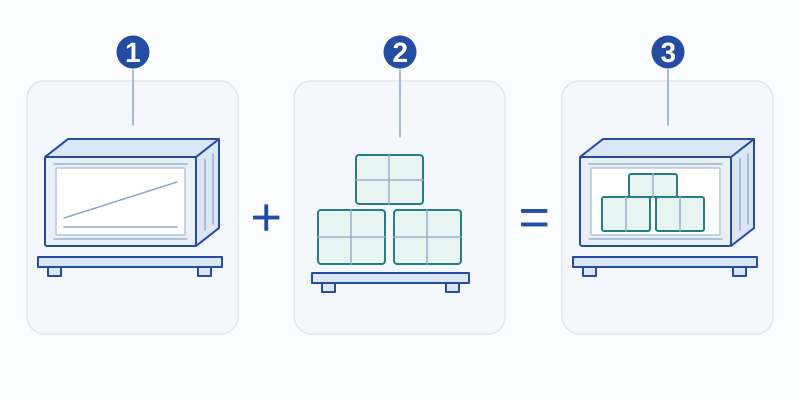
Visual reference
- Empty container
- Contents mass
- Total gross mass
Illustrative diagram, not to scale.
Get the tare for the offered unit
Ask for a photo of the weight markings and the container number. If the markings are unclear or the box has been modified, ask the seller for current weight documentation or an actual weighing for your move.
Add everything that stays inside
Include the contents, pallets and packing, plus fixtures or shelving that the stated tare doesn’t already cover. The worked example above uses 10,000 lb of contents on top of the empty container weight.
Check the floor where the weight sits
A compact machine can load a few points on the floor. Send the seller the machine weight, the number and positions of its feet or wheels, and the proposed loading method. Ask what the floor can take along that path.
Give the carrier the weight before choosing equipment
Tell the carrier whether the unit moves empty or loaded, its confirmed weight and how the load is arranged. Ask it to check the route, vehicle and unloading method for those details.
Use current data for fitted equipment
A reefer includes insulation and a refrigeration unit. An office can add partitions, equipment and furnishings. Get the tare for the offered setup and agree what has to come out before a move.
Send a load sketch if the contents are heavy
Mark where the heaviest pieces sit and what will be used to load them. Include the dimensions at the door and access to the placement area. A clear sketch helps the seller and carrier assess the same job.
What to send with a 20ft move request
- Model and container number with confirmed tare.
- Weight of contents and anything added to the shell.
- Load positions and the available unloading setup.
Practical questions
Can I move a 20ft container with my tools inside?
Ask the carrier what it can handle and what must be removed or secured. Give it the actual weights and the position of the heaviest items. Get an answer for the vehicle and unloading method it plans to use.
Can I use the maximum payload as a floor rating?
The maximum payload describes the container’s overall load. Ask for a separate assessment of concentrated weight from machine feet, wheels or rack uprights, including the path across the threshold.
Technical reference for this example
- Hapag-Lloyd 20ft standard weights
Fleet example for tare, maximum gross and maximum payload.
- FHWA truck weight guidance
Why axle loads and spacing matter for road transport.