The 40ft standard fleet example below weighs about 8,270 lb empty. A High Cube or a fitted unit can have a different tare and payload. Before moving one with contents, check the actual weight and how it will be distributed.
Documented example · 40-foot standard
| Tare · empty weight | 8,267 lb |
|---|---|
| Maximum payload | 63,383 lb |
| Maximum gross mass | 71,650 lb |
Example from a transport company’s fleet. Values vary by manufacturer and do not establish availability. Check the offered container’s markings and documents.
Calculate the mass to move
An empty container weighing 8,267 lb plus 10,000 lb of contents weighs about 18,267 lb before adding the truck and trailer.
Read the three weights on the offered container
Start with tare, maximum payload and maximum gross. Tare is the weight of the empty unit as specified. Gross is the total with the load. The payload rating shows how much of that total is available for the contents.
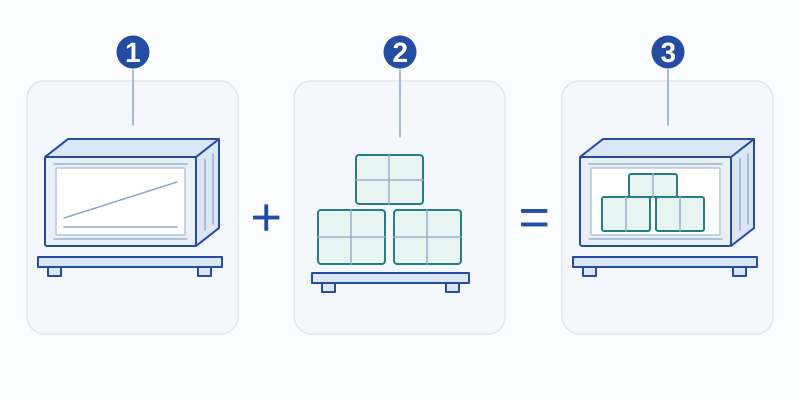
Visual reference
- Empty container
- Contents mass
- Total gross mass
Illustrative diagram, not to scale.
More floor length gives you more space to distribute a load
A 40ft can fit roughly twice the dry storage volume of a 20ft, but capacity by weight comes from the rating on the exact container. Long stock and a compact heavy machine can have very different floor and transport needs.
Calculate the 40ft’s loaded weight
List the contents, skids, packing and equipment. Add them to the tare without counting any fixtures twice. If you’re moving a used unit with unknown contents or additions, ask about weighing it before dispatch.
Show where heavy items sit along the floor
Put each heavy item and its support points on a lengthwise sketch. A machine at the far end can load a small part of the floor and change how the trailer carries the weight. Give the layout to the supplier and carrier for review.
Compare standard and High Cube by the actual ratings
In Hapag-Lloyd’s examples, the standard 40ft has a tare of about 8,267 lb and the 40ft High Cube about 8,598 lb. Both show a similar maximum gross. Compare the offered unit’s ratings if payload matters.
Separate the container rating from the drive and unload
Give the carrier the gross weight of the loaded container. The carrier also has to account for its tractor and trailer, axle loads, route and the equipment used to set the container down.
Compare two smaller loads if the site is tight
Splitting contents can make access easier, but each unit still has to be moved and placed. If the load can be split, ask the carrier to compare the route and handling for two smaller units with a single 40ft.
Figures to confirm for a 40ft loaded move
- Current tare, total contents and actual gross if available.
- Heavy items and their position along the floor.
- Carrier and unloading plan for the confirmed weights.
Practical questions
Can a 40ft High Cube hold more weight than standard?
Compare the specific plates and the floor rating. In the cited fleet examples, the heavier High Cube shell leaves a little less weight for contents at the same maximum gross.
What if the box is within its rating but the truck can’t take it?
Ask the carrier what needs to change, such as sending the container empty, splitting the contents or pricing other equipment. Road and equipment limits also apply to the full truck setup.
Technical reference for this example
- Hapag-Lloyd 40ft standard weights
Fleet example for the standard unit’s tare and payload.
- Hapag-Lloyd 40ft High Cube weights
Comparison of ratings for a taller model.
- FHWA bridge formula weights
Axle spacing and vehicle weight checks for U.S. road transport.