If you need to pull a machine or one pallet out of the middle of a row, a side opening can save a lot of moving. Ask what part of the wall opens and where the folded panels go before choosing a 20ft or 40ft.
Name the move you need to make easier
Pick an awkward load or a stock item you retrieve often. Draw how it moves in and out of a standard box and then through the side. If the side makes the route simpler, use that movement to judge each door layout.
Compare a full opening with separate bays
Ask for an open-door photo or a drawing with the fixed posts shown. One long machine needs a clear run, while multiple pallet positions can work well with separate doors if you can open them independently.
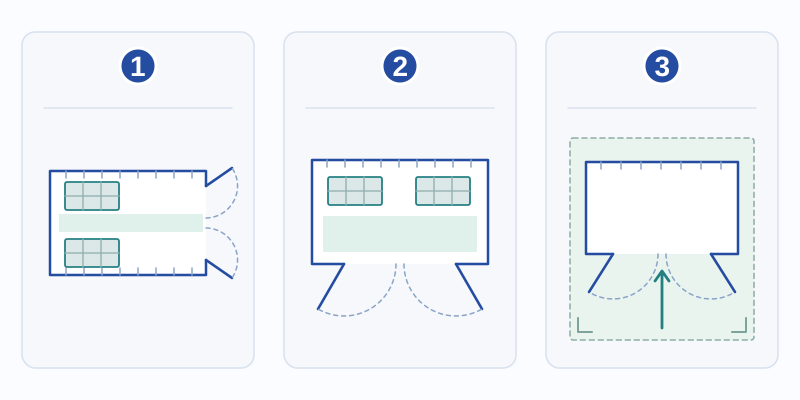
Visual reference
- End access
- Illustrated side access
- Clearance and approach
Illustrative diagram, not to scale.
Measure the usable opening between posts and hardware
Use the clear width and height with the panels held open. Add the skid, cart, forks or wrap to the load measurement. Check the sill as well if wheels need to roll across it.
Draw the door swing and the whole approach
Put the container next to the fence, parked equipment or neighboring units on your sketch. Open the doors on the plan and check where a cart or forklift can turn and line up. Leave room to close and lock the panels afterward.
Check floor and handling limits for the equipment
Send the seller the weight and wheel or support locations of the loaded equipment that needs to enter. Ask whether the floor and threshold can take it. If the forklift can work from outside, plan that reach and approach separately.
Ask to see all the panels in motion on a used unit
Watch each hinge and keeper while the seller opens and latches the doors. Check the sill and seals near the bays you’ll use most. Keep any agreed repair tied to the actual unit number.
Choose a length you can use along the whole side
Draw the bays you’ll use every week and verify which stay accessible on a normal workday. Compare the price of a 20ft with enough useful opening against a 40ft that may need more working room beside it.
Details to request for an open side container
- Photo or drawing showing actual posts and fully open panels.
- Clear opening, floor condition and threshold at the active bays.
- Side approach with the load and equipment in position.
Explore suitable models
Containers to compare
Estimates in USD before applicable sales tax, delivery and unloading. The seller confirms taxes and the complete price for your delivery address.
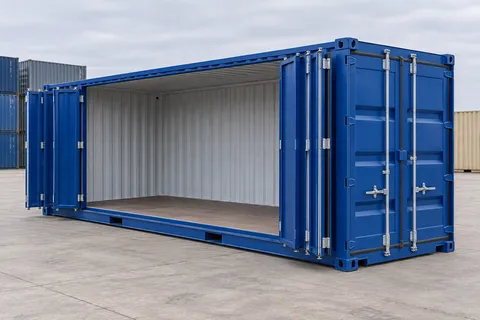
CA-20-OPEN-SIDE-NEW-BLUE
20ft Open Side container · New · one trip · Blue
New · one trip / Blue
$5,340Before applicable sales tax
Request an offer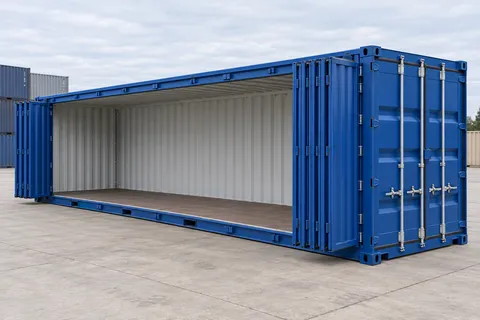
CA-40-OPEN-SIDE-NEW-BLUE
40ft Open Side container · New · one trip · Blue
New · one trip / Blue
$8,480Before applicable sales tax
Request an offer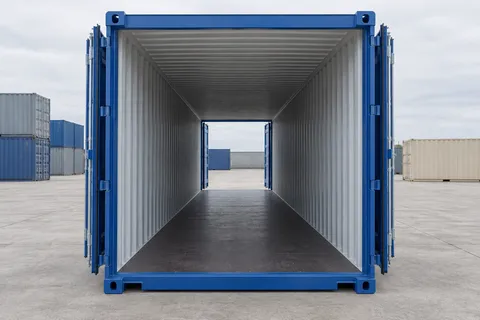
CA-40-DOUBLE-DOOR-NEW-BLUE
40ft Double Door container · New · one trip · Blue
New · one trip / Blue
$4,540Before applicable sales tax
Request an offerPractical questions
Is a 40ft open side container always open along the whole wall?
Ask for the drawing of the exact unit. Check the largest uninterrupted opening and whether the fixed posts match the loads you’ll move.
Is open side the same as double-door?
Open side gives access along a long wall. Double-door usually means cargo doors at opposite ends. Check the offered layout because those entrances require different working space.
Technical references
- Advanced Container 20ft open side example
A US example of full-side doors and the types of loading they support.
- Boxhub specialty shipping container guide
Examples of different side and end door arrangements.