A condition label helps you compare listings. For the actual unit, check how the doors work, whether water gets in, which repairs have been made and whether the container suits your use.
Separate appearance, weather protection and operating condition
A dent in a side panel can be cosmetic. A dent at the door frame can keep the doors from sealing or closing. Check whichever matters in the use you have planned, and ask about defects even when the paint looks good.
Read the four grades used in this catalog
The listings use new or one-trip, excellent used, good used, and grade C, shown as last trip. Use those labels to shortlist, then ask the seller to define the offered condition and describe any work still needed.
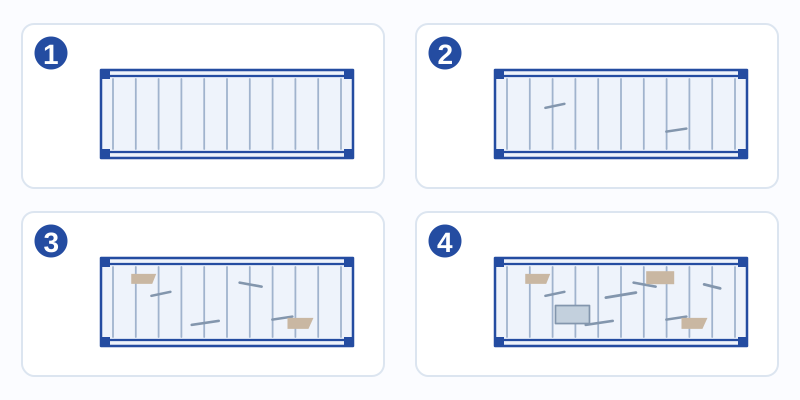
Visual reference
- New · one trip
- Used · excellent condition
- Used · good condition
- Used · last trip
Illustrative diagram, not to scale.
Read one-trip, WWT and cargo-worthy terms on the quote
One-trip normally describes a newer unit that has made an initial cargo trip. Wind and watertight, often shortened to WWT, usually describes the seller’s weather-resistance grade. Cargo-worthy concerns freight suitability. Ask how the seller assessed its label and what it commits to in writing.
Check the CSC plate if the box will move as freight
Get a photo of the safety approval plate and the current examination details for the container number you’ll buy. Show them to your freight forwarder and confirm acceptance for the intended trip before paying.
Match acceptable wear to the job
For storage you open daily, check hinges, locking bars and the threshold. For pallet traffic, look for raised repairs along the loading route. If customer-facing appearance matters, request a picture of the face that will be visible.
Work out the cost to make each offer usable
Add the repairs you would need after delivery and work that needs doing at the yard. If a cheaper unit requires a floor or door repair before you can use it, compare the totals against a unit ready for your job.
Keep a record of the actual unit
Ask for the unit number, current photos and a description of damage or repairs. Include seller commitments about leaks, door operation and any repair in the offer. Use that record during the handoff.
Compare two grades on the same basis
- Seller’s grade definition and the unit number.
- Photos of the floor, roof and working doors.
- Written terms for repairs, weather protection and acceptance.
Find the right type of container
Practical questions
Is excellent used condition the same as cargo-worthy?
Ask the seller how it defines excellent condition. If you are booking freight, have the forwarder verify the unit’s condition and current examination record separately.
Does the last-trip label tell me how long it will last?
Grade C describes the catalog selection. Estimate remaining usefulness from the actual unit’s condition, how you intend to use it and the repairs you can make.
Technical references
- Boxhub guide to container conditions and grades
US retail examples of condition terms and buyer expectations.
- IMO Convention for Safe Containers
Safety approval plates and periodic examinations for transport.