Water on the ceiling can come from humid air meeting cold steel. Water near one door after rain points you toward a different check. Work out when the moisture appears and where it starts before buying vents, insulation or a dehumidifier.
Tell roof condensation from a leak
Look for widespread droplets under the roof, especially after a drop in temperature. A damp track below one seam, patch or door seal after rain is a reason to inspect that area for water entry. It’s possible to have both problems.
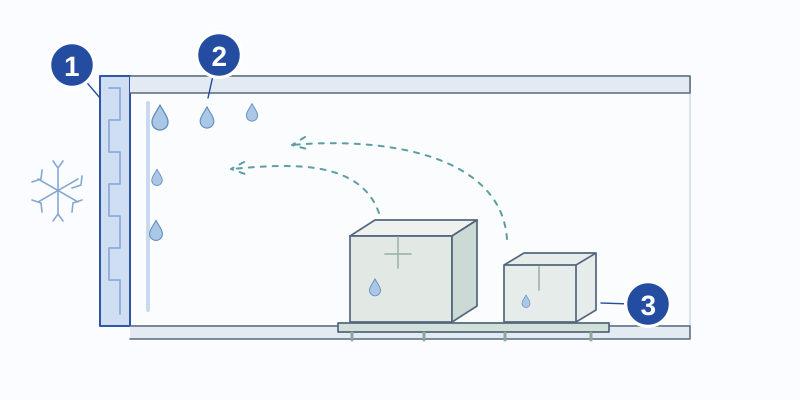
Visual reference
- Cold surface
- Possible condensation
- Moisture introduced
Illustrative diagram, not to scale.
Keep a simple record of temperature and humidity
Use a small thermometer and humidity logger inside. Note the weather, when the doors opened and when wet goods went in. Drop the readings and photos into a short log so you can compare wet and dry periods.
Remove the moisture you bring in
Let rain-soaked tools dry before putting them away. Avoid loading wet pallets or cardboard when you can. Leave space around stored goods so you can spot damp patches and locate the source.
Decide when ventilation will help
Dry outside air can help carry moisture out. Humid outside air can bring moisture in, especially when it meets a cool interior. Check conditions inside and outside before relying on vents as the whole fix.
Choose a fix for the goods you have
A leak needs repair at the point of entry. Insulation and a suitable design can help reduce cold interior surfaces. A powered dehumidifier can help control moisture in an appropriate enclosure when you can supply power and manage drainage. For sensitive stock, check what conditions it needs through the whole season.
Measure again after making one change
Track the same spots for a week of typical use, including nights and after rain. Look at the backs of shelves and bottoms of cartons as well as the ceiling. If wet patches return at the same seam, follow up on weather entry.
Show the pattern when you ask for help
Send pictures of the damp area, the roof or door nearby and the date each mark appeared. Include readings and how often the container is opened. That gives a contractor a better starting point than a request for more ventilation alone.
What to check at the next wet spell
- Where the first moisture appears.
- Outdoor weather, door openings and wet items loaded.
- Temperature and humidity before and after a change.
Find the right type of container
Containers to compare
Estimates in USD before applicable sales tax, delivery and unloading. The seller confirms taxes and the complete price for your delivery address.
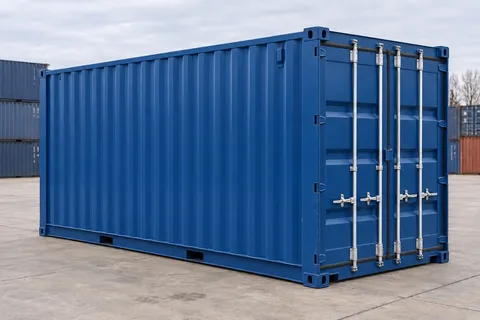
CA-20-STANDARD-NEW-BLUE
20ft Standard container · New · one trip · Blue
New · one trip / Blue
$2,020Before applicable sales tax
Request a quote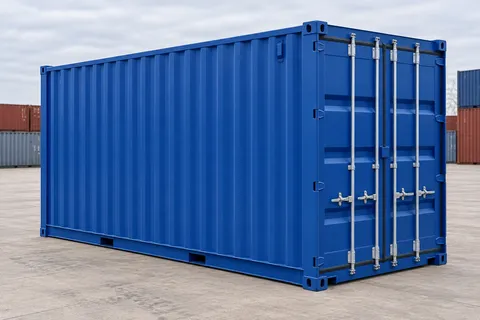
CA-20-HIGH-CUBE-NEW-BLUE
20ft High Cube container · New · one trip · Blue
New · one trip / Blue
$2,630Before applicable sales tax
Request a quote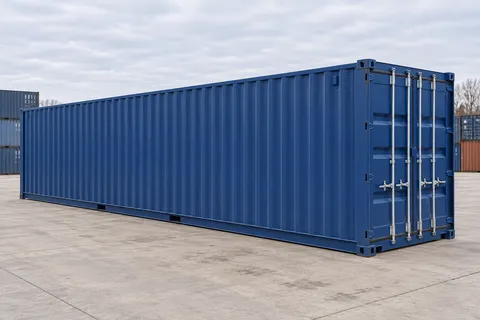
CA-40-STANDARD-NEW-BLUE
40ft Standard container · New · one trip · Blue
New · one trip / Blue
$3,030Before applicable sales tax
Request a quotePractical questions
Why is water dripping from the roof when it hasn’t rained?
Humid air can condense when it touches steel that has cooled below the air’s dew point. Check for droplets across the roof and look for moisture from goods or outdoor air.
Will a couple of vents keep furniture dry all winter?
Vents alone may be insufficient for furniture sensitive to humidity and temperature. Find out the conditions the furniture needs and use monitoring to check whether your setup maintains them.
Technical references
- US EPA moisture control guidance
Explains how cold surfaces, humidity and outdoor air contribute to condensation in enclosures.